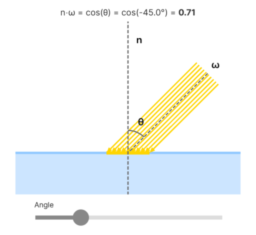
- The article builds up PBR theory from the physics of light
- covers electromagnetic radiation, Fresnel equations, Snell’s law, and the microfacet model, distinguishing metals from dielectrics
- derives the Cook-Torrance BRDF step by step, including the GGX Normal Distribution Function, Schlick-GGX Geometric Function, and Fresnel-Schlick approximation
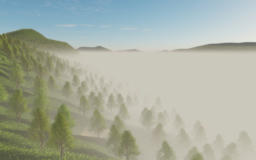
- derives fog color lerp from the volumetric rendering equation
- extends the derivation to exponential height fog by computing optical depth for an extinction coefficient
- presents a VNDF-based micro-shadowing approach that operates at the microfacet level rather than the geometric surface level
- introduces a LUT-based real-time approximation parameterized by Visibility, Roughness, as a practical alternative to per-light VNDF sampling
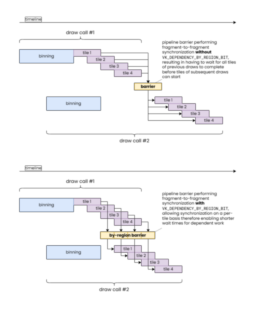
- explains pipeline barriers as a combination of three orthogonal aspects: execution control, cache control, and image layout transitions
- details how image layouts abstract GPU-specific compression schemes such as fast clears, delta color compression (DCC), and hierarchical depth (Hi-Z)
- demonstrates that applications rarely need to track image layouts at runtime; instead, each image has a natural default layout derived from its purpose, requiring only temporary transitions to other layouts
- NVIDIA GTC is starting March 16 attend virtually for free.
- Presenting the latest breakthroughs in generative AI, accelerated computing, simulation technology, and more.
- My top sessions: OpenUSD Crash Course (DLIW82272), Fundamentals of GPU-Accelerated Workflows (DLIW82265) and more
- Win an RTX Pro 6000 GPU and see my full session recommendations here
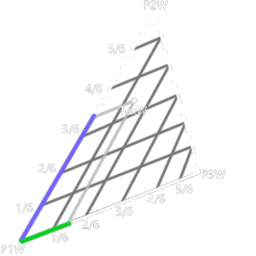
- describes a compute shader implementation that calculates lighting per-texel
- uses barycentric coordinates to map every texel from UV space to world space
- supports hard shadows and proximity-based dynamic blurred shadows via ray-triangle intersection tests, combining baked and real-time lighting passes into a final texture
- describes a Vulkan voxel spring-mass simulation for GPU-accelerated audio generation that requires a massive amount of dispatches
- resolves the command buffer recording bottleneck by recording a short reusable block, dispatches with VK_COMMAND_BUFFER_USAGE_SIMULTANEOUS_USE_BIT, and submits it multiple times

- introduces Eyot, a programming language that aims to make offloading work to the GPU simple
- compiled for both CPU and GPU with the runtime automatically handling memory allocation, kernel compilation, and scheduling

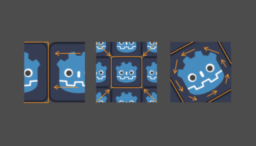
- beginner-friendly tutorial covering UV translation, scaling, and rotation inside Godot
- shows the effects of scaling UV coordinates
- demonstrates anchoring transformations to an arbitrary pivot
- outlines idTech8’s new geometry pipeline for DOOM: The Dark Ages
- using a triangle visibility buffer approach
- evaluates multiple shadingdispatch strategies, and shares performance guidelines
- presents how the tiled deferred lighting algorithm supports software VRS
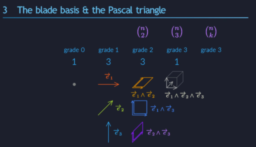
- introduces the wedge product as the fundamental building block of geometric algebra
- showing how it constructs basis elements from which all multivectors are formed
- explains the three key properties of the wedge product and shows how they represent linear subspaces
Thanks to Matt Pharr for support of this series.
Would you like to see your name here too? Become a Patreon of this series.
