- highlights winning projects of the SIGGRAPH 2026 Student Research Competition
- each winner shares the inspiration behind their work, the biggest hurdles they faced, and what’s coming next
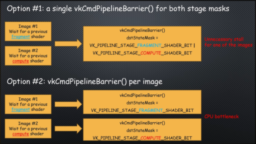
- explains the new Vulkan Synchronization2 API
- describes how stage and access masks moved into the VkImageMemoryBarrier2 structure to allow for better batching and more fine-grained control
- demonstrates the intgreation into a grayscale compute post-processing effect
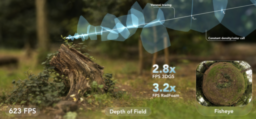
- presents VoroTracing, a differentiable Voronoi ray-tracing method for view synthesis
- presents how the scene representation was designed to reduce traversal length, per-cell work, and memory traffic
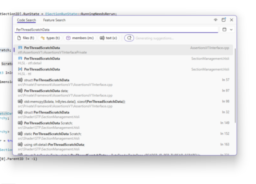
- introduces an editor-independent HLSL language server built around DXC’s IntelliSense API
- provides code completion, hover, signature help, semantic coloring, go-to-definition, references/rename, and workspace symbol search
- provides integrations for Visual Studio and VS Code
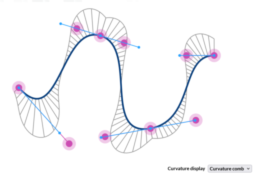
- argues that classic bezier control points poorly represent smooth curvature and proposes curvature-aware handles
- derives the relationship between control points, tangents, and curvature
- presents how to convert between curvature handles and classic beziers
- provides interactive web demos and source code
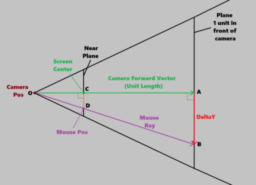
- derives a compact way to cast a world-space ray through a given screen-space position
- uses the camera forward, right, and up vectors together with NDC coordinates
- includes diagrams explaining the geometry and pseudocode
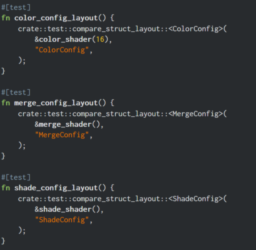
- explains subtle layout differences between Rust and WGSL
- presents how to parse WGSL with naga and compare offsets and sizes against Rust using the Facet reflection library
- includes a compare_struct_layout helper that can be used to validate that layouts match
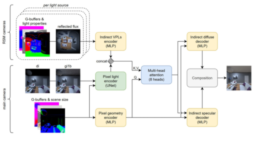
- presents a attention-based network for global illumination
- build around predictions of diffuse and specular indirect illumination from reflected flux (reflected incoming light) rendered from light-source perspectives
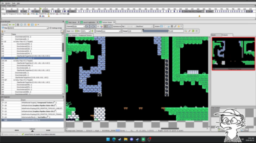
- presents a walkthrough single frame of Animal Well using RenderDoc
- explains the full rendering pipeline with a large focus on the scene representation layers
- points out the lighting that is implemented with CPU-extruded shadow lights
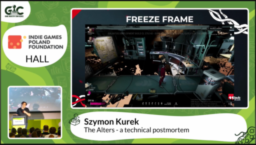
- technical postmortem focusing on the rendering and engine challenges of The Alters built in Unreal Engine 5.2
- explains the choice to avoid Lumen and virtual shadow maps
- details their custom terrain pipeline that uses virtual heightfield meshes
- covers lighting, PSO bundle caching, and a custom variable-rate shading system
Thanks to Aras Pranckevicius for support of this series.
Would you like to see your name here too? Become a Patreon of this series.
