- presents a deep-dive analysis of CUDA optimization remaining in 3D Gaussian Splatting after comparison with current literature techniques
- details five hardware-level optimizations targeting warp execution, register pressure, L2 cache, and SIMT divergence
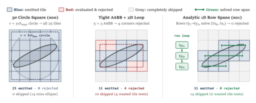
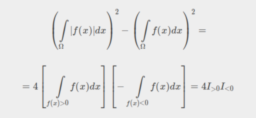
- explores the theoretical variance bounds of Monte-Carlo importance sampling for sign-changing functions
- derives the optimal sampling distribution using calculus of variations and Lagrange multipliers
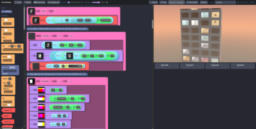
- introduces a prototype shader editor that combines Shadertoy-style GLSL coding with Scratch-like visual blocks
- implements a bidirectional AST mapping that keeps text and block representations synchronized
- supports inline expression previews with multiple evaluations for loop and function contexts
- announces the release of Agility SDK 1.620 and 1.722 preview
- covers DirectX Dump Files, Partial Graphics Programs, Fence Barriers Tier 1, Batched Asynchronous Command Lists, and DXR Clustered Geometry with Partitioned TLAS (see below for details)
- includes day-one PIX support and updated drivers from AMD, Intel, and NVIDIA

- previews DXR Clustered Geometry and Partitioned TLAS, enabling GPU-driven efficient scene updates
- introduces Cluster-Level Acceleration Structures (CLAS) for reusable meshlet building blocks and PTLAS for sparse partition-based TLAS updates
- provides API walkthroughs, shader intrinsics in Shader Model 6.10, and official samples
- additionally discusses how animated meshes are better supported

- covers topics such as virtual memory, paging, and allocation strategies
- aims to provide visual explanations suitable for readers new to systems topics

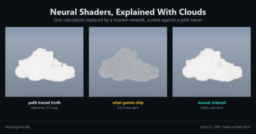
- presents a walkthrough of replacing a cloud in-scattering approximation with a small trained neural network
- details how the inputs are processed using mip-pyramid density samples and a two-hidden-layer MLP evaluated in plain HLSL
- measures the neural model against a path-traced reference
- compares error and performance
- dissects the Vulkan rendering pipeline of the game Endfield
- covers deferred G-buffer layout, virtual texturing, screen-space effects, volumetric fog, irradiance volumes, and character forward lighting
- highlights a mixed deferred and forward character shading approach

- introduces Bento, a shading language and compiler infrastructure that lowers directly to SPIR-V, AIR, or GLSL
- features built-in uniformity analysis, automatic workgroup barriers, memory-space-tagged references, generics, and compile-time const evaluation
- aims to ship a C library with tools including a linker, optimizer, validator, and language server

- explains how to implement 3D Radiance Cascades for real-time global illumination using ray splitting and sparse probe hashing
- details a hash-table-based sparse probe allocation, per-interval ray binning, and trilinear merging across cascades
- adds LOD fading, temporal accumulation via stable probe indices, and a secondary bounce cache to achieve multi-bounce GI
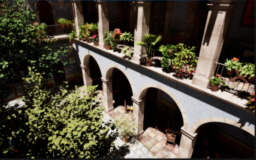
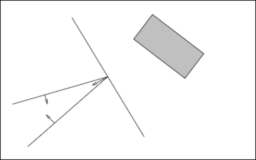
- presents a technique for culling shadow casters by constructing a shadow-caster volume that extends the view frustum to include the light source
- extends the method to directional lights and semi-transparent object bounds
Thanks to Jasper Bekkers for support of this series.
Would you like to see your name here too? Become a Patreon of this series.
