- discusses Sebastian Aaltonen’s “No Graphics API” article
- examines which graphics-specific functions might be stripped and the implications for multi-device/multi-process setups
- highlights practical concerns (write-combining memory pitfalls, deadlock avoidance, and 32-bit compatibility)

- introduces Shader2Human, a lightweight HLSL/GLSL library that exposes debugging tools directly from shaders
- provides macros and helpers to make shader diagnostics and rapid iteration easier without heavy capture tooling
- slides walk through usage patterns and examples for faster shader development

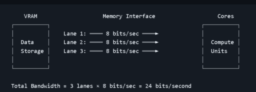
- tutorial on GPU memory concepts, covers movement between VRAM and compute units, and the role of memory speed, interface width and bandwidth
- explains memory-bound vs compute-bound operations via arithmetic intensity and practical tinygrad benchmarks, with concrete optimization guidelines
- includes hands-on examples and timing tips for accurate GPU benchmarking and optimization
- demonstrates how lightweight neural networks can be integrated into CPU-based production path tracers to improve memory, speed, and image quality under low-latency constraints
- discusses practical inference considerations on CPU and the trade-offs when bringing ML into offline rendering pipelines
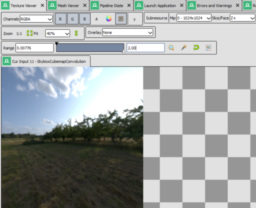
- investigates a seam artifact in HDRP’s LD preconvolution caused by reusing identical sample sequences per pixel combined with local-frame singularities at cube-face boundaries
- suggests practical fixes and recommends decorrelation as a pragmatic patch
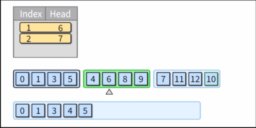
- presents a low-memory approach for globally sorting mostly-ordered event streams
- leverages data patterns (nearly sorted streams, local disorder) to prefetch and hide I/O, making global sorting cheaper
- discusses comparisons to k-way lazy merge and proposes a hybrid JIT-sort fallback
- GPC 2025 archive with session descriptions and slides from a wide range of real-time graphics talks
- inluding Shader2Human (shader debugging), Blender Cycles architecture, real-time path tracing, neural shading, profiling & platform optimization talks

- showcases an SDF-based engine for high-fidelity, non-destructive world edits
- covers architecture & optimizations:
- discusses ray-marching performance issues, physics/collision integration, terrain as SDF and practical trade-offs versus triangle meshes
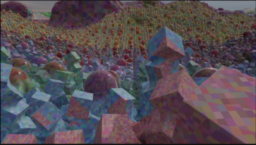
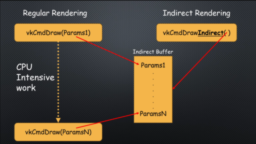
- practical tutorial on implementing indirect rendering in Vulkan, covering vertex/index/uniform buffer offsets, indirect buffers, and vkCmdDrawIndirect
- demonstrates a new pipeline class and shows how to enable indirect rendering
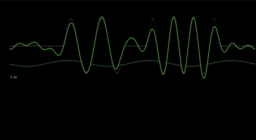
- walkthrough of programmatic audio analysis: techniques for computing FFTs, spectrograms and extracting features from audio signals
- includes code examples and visualizations to illustrate frequency vs time behaviour and practical tips for real-time analysis
Thanks to Eric Haines for support of this series.
Would you like to see your name here too? Become a Patreon of this series.
