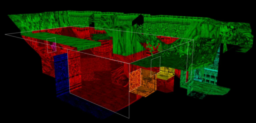
- analyzes the rendering techniques used in Tomb Raider III, running on hardware without T&L or programmable shaders
- covers portal-based room traversal for visibility culling, texture atlases with 256×256 palettized tiles, and distance fog to mask geometry cutoffs
- describes how static lighting was baked into vertex colors, and how color-key transparency and flipbook texture animations achieved dynamic-looking effects on constrained hardware
- compares the three hardware lossy image compression formats: Apple’s Metal lossy, ARM’s AFRC, and ImgTec’s PVRIC4
- benchmarks quality and throughput against Spark across R8, RG8, and RGBA8 formats

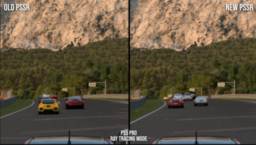
- Digital Foundry tests the upgraded PSSR upscaler across various games
- revisits previously contentious PSSR-supported games using the new “Enhance Image Quality” dashboard mode and evaluates the improvements, remaining problems, and any regressions
- discusses whether Sony should have enabled the new PSSR by default and whether it qualifies as the definitive upscaling solution on PS5 Pro
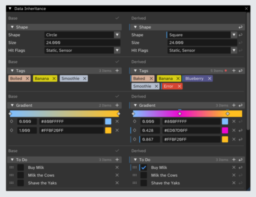
- article and prototype implementation explaining how to build data inheritance, where derived data inherits from a base, and overrides are explicitly tracked per property
- covers how to extend the concept from simple scalar fields to collections
- discusses the associated UI challenges such as visualizing override indicators, handling removed items, and providing granular revert controls
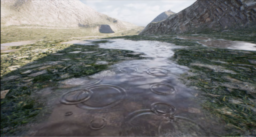
- new part of the Terrain Shaders series, showing how to add puddle effects to landscapes in Unreal Engine
- follows on from the previous episode, which covered rain effects on terrain in Unity
- demonstrates how to blend puddle wetness and reflections into a landscape material shader
- tutorial on using Signed Distance Field (SDF) textures to drive shadow placement on anime-style face shading
- SDF face textures encode where shadows should appear on the face relative to light direction

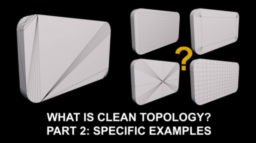
- follow-up to part 1 on what constitutes a clean mesh in 3D modeling
- walks through specific examples of how to clean up meshes for film, games, and other use cases
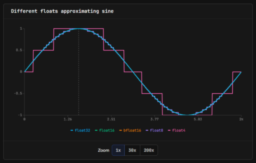
- explains how LLM quantization works, covering how floats are stored and why smaller formats (float16, bfloat16, float8, float4) can replace float32 for model weights
- describes symmetric and asymmetric quantization as more effective alternatives to simple rounding
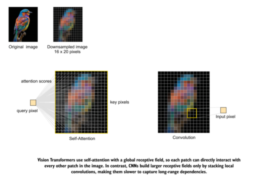
- explains the Vision Transformer (ViT) architecture
- covers patch embeddings, learnable positional encodings, the class token, and the encoder-only classification head
- walkthrough for a hands-on fine-tuning example
- personal statement on why SIGGRAPH Asia 2026 should be boycotted due to Malaysia being chosen as the host country
- criticizes the official SIGGRAPH for framing LGBTQ+ inclusion as a matter of cultural opinion rather than membership safety
- calls on SIGGRAPH leadership to relocate the conference and to introduce a structural venue review process that consults at-risk communities

Thanks to Stephen Hill for support of this series.
Would you like to see your name here too? Become a Patreon of this series.
