- covers the main culling techniques used in modern real-time renderers, grouped by category
- explains distance, backface, frustum, occlusion (Hi-Z, two-pass GPU-driven approaches), and meshlet-level cluster culling
- discusses how techniques work together and when to apply each one
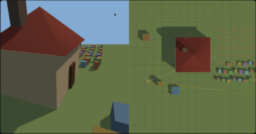
- The author argues that the key to writing scalable multi-threaded code is minimizing synchronization by bucketing mutations so each thread writes to non-overlapping memory regions
- explains how single-threaded APIs that implicitly combine mutations and reads obscure write ownership and make it hard to safely parallelize later
- demonstrates how to design APIs to eliminate synchronization entirely for many workloads

- introduces a screen-space refraction method that replaces ray marching with Newton’s method for root finding
- achieves rapid convergence in only a few iterations, reducing per-pixel cost compared to standard ray-marching approaches
- also applies the technique to refracted light rays to accelerate screen-space caustics
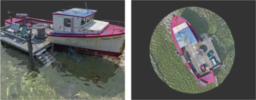
- presents algorithmic improvements to ReSTIR PT that improve performance
- introduces reciprocal neighbor selection to halve spatial reuse cost, footprint-based reconnection criteria for more robust shift mappings, and duplication maps to reduce spatiotemporal correlation
- further improves quality by unifying direct and global illumination into the same reservoirs

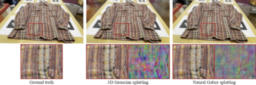
- addresses a core limitation of 3D Gaussian Splatting (3DGS), where high-frequency surface details require a large number of primitives
- augments each Gaussian primitive with a lightweight MLP that models Gabor-like color patterns
- This allows a single primitive to capture sharp color transitions and texture detail
- introduces a frequency-aware densification strategy that prunes and clones primitives based on frequency energy mismatch
- a series of videos presenting a look at the technology of the Ubisoft Anvil Engine
- contains a developer’s perspective to provide insights
- presents GI, micropolygons, weather simulation, and how to handle large worlds

Thanks to Jasper Bekkers for support of this series.
Would you like to see your name here too? Become a Patreon of this series.
