- introduces Loon GPU, a bindless abstraction layer implemented on Vulkan 1.3 and Metal 4
- exposes GPU allocations as device pointers, removes explicit vertex buffers, bind groups, and image layouts
- discusses Slang shader portability issues and the tradeoffs of simplifying the GPU API surface

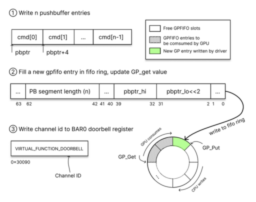
- A paper that recovers NVIDIA’s closed-source userspace driver command stream by instrumentation
- shows how command-level visibility isolates CUDA data movement and CUDA Graph performance from driver overhead
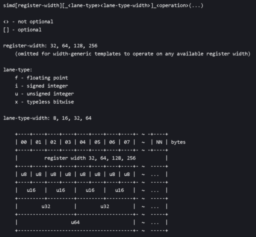
- describes a typeless SIMD design that aims to make cross-platform SIMD code easier to write and debug
- advocates SSA-style temporary naming and treating registers as bags of bits instead of strongly typed vectors
- shows a naming convention and ABI-aware interface that scales from scalar reference implementations to wider vector widths without platform-specific clutter
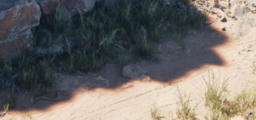
- shows how to integrate a colored saturation effect into shadow penumbrae for dynamic lights in Unreal Engine 5
- the technique desaturates the lit color, then restores a configurable saturation amount based on shadow amount
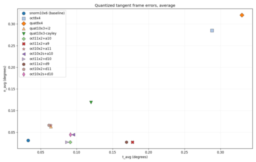
- evaluates compact tangent frame encodings and compares octahedral, quaternion/QTangent, tangent-angle, and diamond formats
- recommends storing orthogonal frames with bitangent reconstruction and choosing bit allocations that favor practical normal/tangent quality
- previews the D3D12 LinAlg Matrix API, a unified successor to Cooperative Vectors and WaveMMA for hardware matrix acceleration
- introduces three matrix scopes: Thread, Wave, and ThreadGroup
- explains that SM6.10’s high-level Matrix APIs compile to a mid-level driver-facing API so hardware can optimize based on context and matrix use case
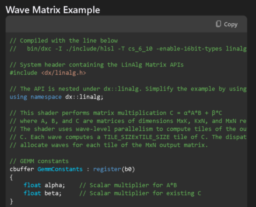
- announces Shader Model 6.10 support in AgilitySDK 1.720-preview and DXC 1.10.2605.2
- introduces HLSL features such as linalg::Matrix, Group Wave Index, Variable Group Shared Memory, and raytracing intrinsics TriangleObjectPositions and ClusterID
- also presents the D3D12 batched command list APIs that allow overlapping operations such as clears and copies

- video overview of the papers presented at I3D from May 13 to 15
- highlights six paper groups across VR, character behavior, model improvements, geometry, rendering, and performance improvements

- deep dive interview with graphics programmer Sebastian Aaltonen on rendering evolution, game industry career, and future graphics API ideas
- covers his work on Claybook & Second Order and Unity technical struggles
- presents a deeper discussion of the “No Graphics API” vision
- argues that modern APIs have become overly complex and advocates for simpler, hardware-friendly GPU memory access with reduced driver abstraction

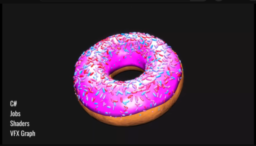
- presents Material Blending to smoothly transition materials for effects like cooking a donut without complex animation
- shows how to manipulate vertex data with Jobs, demonstrates shader-based vertex displacement to raise glazed areas above the dough mesh, and uses noise textures for tactile surface detail
- focuses on programmer-oriented techniques to create unique visual effects and presents them in other use-cases too
Thanks to Jasper Bekkers for support of this series.
Would you like to see your name here too? Become a Patreon of this series.
