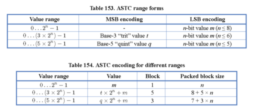
- explains why ASTC uses integer sequence encoding (ISE)
- shows that ISE’s advantage over a simple prefix code is only about 0.07 bits per symbol in practice
- argues the real benefit is that the predictability of fixed-size payloads simplifies encoder design
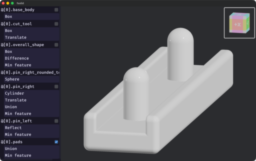
- describes a CAD prototype that renders implicit surfaces using a contree-style sparse voxel structure
- details a two-phase pipeline: CPU-side discretization into tiles/contrees and GPU tracing with DDA-based traversal
- shows how the design balances feature resolution, GPU-friendly memory layouts, and parallel loading
- introduces REST3D, a single-image reconstruction framework that prioritizes physical stability in generated 3D scenes
- combines scene-tree-based physical reasoning with physics-constrained optimization

- announces D3D12 AgilitySDK preview and DXC shader compiler update
- adds HLSL VectorAccumulate, partial graphics programs, GUID texture layouts, and UAV support for depth stencil resources
- highlights driver and hardware support of these features

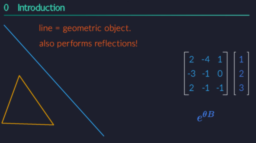
- explains how geometric algebra projects one vector onto another using the geometric product and vector inverse
- derives projection and rejection formulas, showing the orthogonal remainder after removing the projected component
- stresses that projection depends only on direction, not the length of the target vector
- brief preview how this will relate to reflections and rotations
- the blog post describes the newly introduced feature in more details
- discusses the motivation and challenges of existing solutions
- presents how the partial programs aim to resolve the issues

Thanks to Aras Pranckevičius for support of this series.
Would you like to see your name here too? Become a Patreon of this series.
