- traces the evolution of graphics APIs from OpenGL to D3D12, Vulkan, and Metal
- highlights the complexity bottleneck of modern APIs, including driver overhead, pipeline state object (PSO) stuttering, and resource-heavy barriers
- proposes an alternative design utilizing a simple GPU memory model, pointer-based bindings, as well as simplified hazard tracking
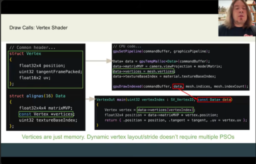
- introduces Triton, a user-mode driver and kernel-mode driver that brings D3D11 support to QEMU virtual machines
- details the architecture that performs a reverse transform from DDI back to custom DirectX 11 API calls to reuse the existing protocol
- discusses host renderer integrations on macOS, including DXVK with MoltenVK, DXMT (D3D11 to Metal), and Apple’s D3DMetal framework

- A collection of course notes and slides for the “Moving Mobile Graphics” SIGGRAPH course series
- The edition features talks on mobile GPU architecture, neural supersampling and denoising, GPU-driven rendering, and dynamic global illumination on mobile

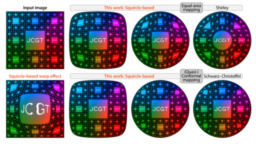
- introduces parametric mappings that send concentric circular contours on a disc onto Fernández-Guasti squircles on a square
- discusses applications like squircle-to-squircle morphing animations and easily tunable warping effects
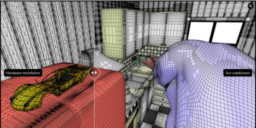
- presents a recursive, view-adaptive subdivision method for Bézier surfaces using GPU work graphs
- represents sub-patches in a memory-efficient 8-byte quad-tree representation
- achieves crack-free, watertight surfaces using independently generated wedge triangles along shared boundaries at mismatched subdivision depths
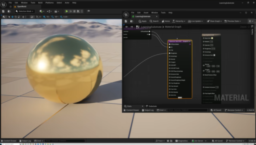
- provides a technical breakdown of light reflectance within Unreal Engine’s Substrate material system
- details how traditional Base Color, Metallic, and Specular inputs map onto Substrate’s Diffuse Albedo, F0, and F90 inputs
- demonstrates how to reconstruct automatic specular guardrails using Lerp nodes to blend parameters based on metalness
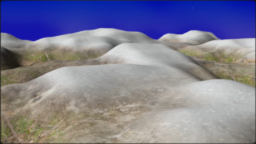
- step-by-step guide on implementing Perlin Noise in C++ for generating terrain heightmaps
- demonstrates using GLM’s Perlin function to calculate gradients and blend values
- details key terrain parameters, including octaves, lacunarity, amplitude, random seeds, and normalization
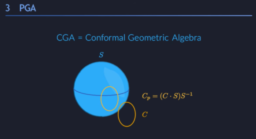
- explores mathematical extensions of Vector Geometric Algebra (VGA) beyond standard quadratic squaring rules
- introduces Projective Geometric Algebra (PGA) alongside meet and join operations for expressing intersections and spans between shapes
- details how PGA models translations as linear transformations using points at infinity, simplifying complex intersections
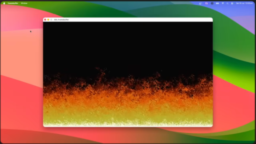
- An introduction to low-level systems programming in C using the SDL3 library
- Walks through project setup, window initialization, custom setting of individual pixels, and implementing advanced animations like the classic Doom fire effect
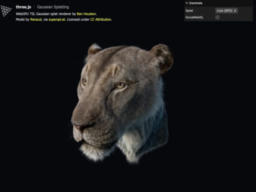
- details the addition of native Gaussian Splatting support to Three.js, utilizing WebGPU and Three.js Shading Language (TSL)
- outlines a layered architecture of the implementation
- presents a GPU-based counting sort combined with view-dependent color rendering through packed Spherical Harmonics
Thanks to Graham Wihlidal for support of this series.
Would you like to see your name here too? Become a Patreon of this series.
