- presents DLSS 5 as a real-time generative neural rendering stage that complements rendering with learned visual expectations
- introduces 3D-guided neural rendering using a one-step pixel-space diffusion model conditioned on rendered frames, motion vectors, and temporal state

- follows a single store instruction through the RTX 4090 memory hierarchy from warp to DRAM
- details coalescing, write-through L1, L2 dirty masks, replacement policy, and the 8-dirty-line cleanup rule
- addition since last week about visibility fences and explaination when writes become visible

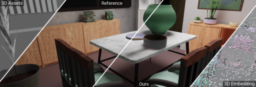
- proposes a 3D light transport embedding that predicts global illumination from scene configurations without ray-traced cues
- represents scenes as point clouds and uses a transformer to encode global point interactions into neural primitives
- demonstrates diffuse GI prediction across indoor scenes and shows adaptation to irradiance estimation, glossy radiance fields, and path guiding
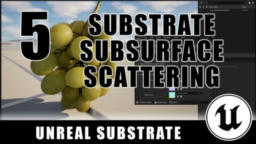
- video covering the implementation of subsurface scattering in Unreal Engine using the Substrate material system
- covers the core Substrate inputs SSS MFP and SSS MFP Scale and demonstrates the workflow on a grape model
- shows how to author a scatter mask and pack it fur usage with the system
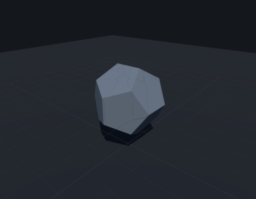
- presents a method for shattering convex meshes into Voronoi shards by clipping against perpendicular bisector planes
- explains the geometric fundamentals, clipping, and how the convexity assumption
- additionally includes an interactive demo
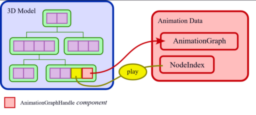
- presenta how animations GLB models are played in Bevy
- explains the interactions of the various components required
- introduces a raytraced audio toolset for Godot that provides spatial audio, reverb, muffling, and ambience
- explains how to set up the World node, assign materials
- covers how to use ray-bounce visualization

Thanks to Marius Horga for support of this series.
Would you like to see your name here too? Become a Patreon of this series.
