- presents Smol Gaussian, a GPU blur that allows for a smoothly animated radius while staying close to a true Gaussian
- based on downsample-blur-upsampling with variance-aware kernel sizing, cubic B-spline reconstruction, and bilinear weight pairing
- compares it against other blurs using interactive examples
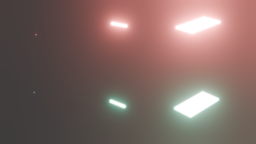
- Call for submissions is now open for Vulkanised 2027 and the Real-time Shading Language Symposium
- The deadline for submissions is October 25

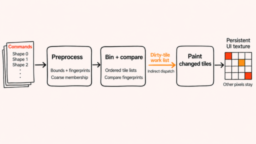
- describes a GPU tile-based rendering system that hashes per-tile command lists and repaints only changed tiles
- measured about 20% lower CPU+GPU power usage
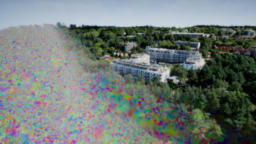
- describes scaling an Unreal Gaussian splatting renderer past the GPU Scene’s 16M instance limit using indirect instanced draws
- adds streamed LOD levels selected by screen-space error, async loading, and a fixed memory budget
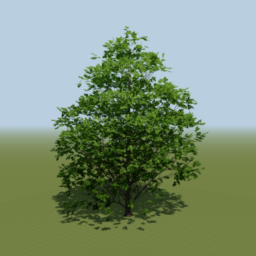
- implements a self-organizing tree model algorithm from SIGGRAPH 2009
- generates bark and foliage cards from the skeleton and bakes depth-field impostors for forest rendering
- discusses how yearly growth is simulated
- continues the Godot procedural GPU patterns series by warping UV coordinates with curl noise
- explains how to apply the chain rule so derivatives stay correct after arbitrary UV warps
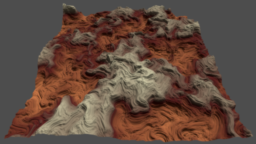
- provides glTF 2.0 adaptations of common graphics research scenes
- ships core and extended variants per scene, with conversion metadata and documented limitations
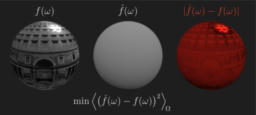
- reframes spherical harmonics as a linear least-squares approximation of a spherical function
- derives fast L1 projection coefficients using spherical averages instead of explicit regression
- warns that common graphics use cases often violate the assumptions of these approximations
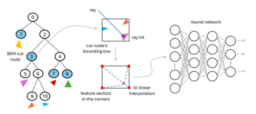
- proposes BVHCode, an input encoding for neural networks in ray tracing that stores learnable feature vectors in BVH cut nodes
- encodes a point by fetching its cut node’s bounding box and bilinearly interpolating corner feature vectors
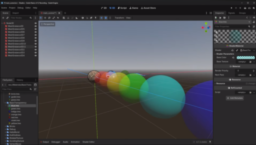
- explains standard alpha blending and Godot’s mix, add, subtract, multiply, and premultiplied-alpha blend modes
- contrasts blending with alpha clipping, which discards pixels below a threshold for crisp cutouts
- demonstrates screen-space dithering as a way to approximate semi-transparency using clipped pixels
Thanks to Nia Bickford for support of this series.
Would you like to see your name here too? Become a Patreon of this series.
