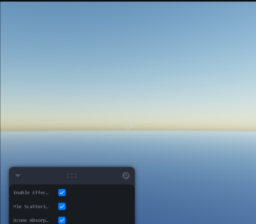
- walks through a WebGPU-based atmospheric rendering system
- builds the shader step-by-step from raymarching through Rayleigh/Mie scattering, ozone absorption, and optical depth
- compares a full atmosphere shader against a faster LUT-based approximation for quality and performance
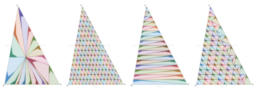
- revisits Dx11-style hardware tessellation and derives a JavaScript-based implementation
- uses a pivot-based edge subdivision with clamped parallelogram splitting and mirrored symmetry for crack-free neighbors
- explains how to distribute interior triangle tessellation while preserving even spacing and visual continuity
- the various substeps are presented with interactive examples
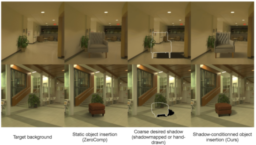
- summarizes SpotLight, a 3DV 2026 Laval University project that adds precise lighting control to diffusion-based image generation
- uses user-drawn 2D shadows as a proxy for light direction and injects them into the denoising process
- validates the approach on a synthetic dataset and user studies, showing improved lighting control and realism for object compositing
- announces support for Windows 11 with AMD GPUs
- describes how precompiled shader delivery reduces load times and reduces shader stutter by avoiding JIT compilation
- describes a Vulkan implementation that replaces binary semaphores with timeline semaphores and an implicit resource-driven framegraph
- treats images, buffers, acceleration structures, and even SSBOs/imageStores as resources with producer/consumer timeline dependencies
- uses tags to minimize unnecessary waits while preserving correctness across complex pass chains
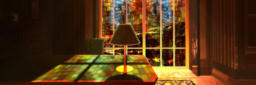
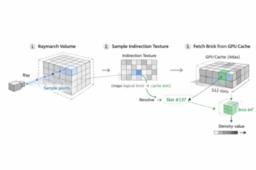
- introduces Kiln, a WebGPU out-of-core volume renderer that streams multi-gigabyte datasets into a smaller working space
- uses virtual texture indirection and compute shader raymarching to support different volumetric rendering modes in the browser
- includes debug visualizations to inspect LOD, indirection, loading, and eviction behavior
Thanks to Nathan Reed for support of this series.
Would you like to see your name here too? Become a Patreon of this series.
