- provides a guide on how to independently work through mathematical papers, textbooks, and lecture notes
- emphasizes that reading mathematics is a difficult skill that requires specific methods to learn effectively
- outlines actionable steps to build a solid foundation and identify underlying structures in mathematical texts

- tackles the scaling problem of ray tracing animated geometry by decoupling animation cost from triangle count
- introduces a technique using low-resolution tetrahedral cages to deform static mini-meshes in the rest-pose space
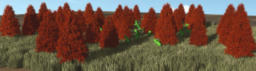
- details the creation of volumetric effects that match the traditional hand-drawn 2D style of The Bad Guys 2
- explores a hybrid workflow combining 3D geometry and lighting with art-directed flattening and 2D linework
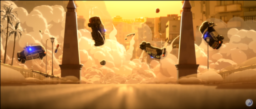
- addresses optimization instabilities in small neural networks used for real-time neural shading
- introduces a multi-instance training approach that uses an ensemble to explore weights efficiently and prune underperforming instances
- revisits loss functions and input parameterization to improve quality when learning high dynamic range reflectance functions
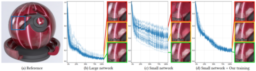
- presents a volumetric representation using mixtures of anisotropic Gabor kernels to achieve continuous level-of-detail
- enables faster rendering by pruning primitives in the frequency and orientation domains
- leverages the low-frequency Gaussian base as a control variate to accelerate volumetric path tracing
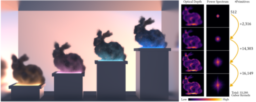
- shares lessons from a career spanning game development, CPU architecture, and graphics research
- emphasizes “persistence with purpose,” encouraging developers to adjust their route after setbacks without abandoning their ultimate goals
- highlights the importance of seizing technical knowledge from unexpected sources and bridging the gap between artists and engineers
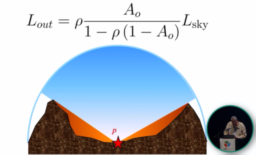
- advocates for continued research into wave optics and better BRDF models, noting that current production standards are not the final destination
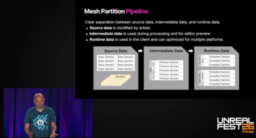
- introduces Mesh Terrain, an experimental non-destructive terrain system in Unreal Engine 5.8 that enables overhangs and vertical cliffs
- replaces traditional heightfields with a partitionable mesh stack that leverages Nanite
- utilizes a layer-based modifier workflow allowing modifications without destroying underlying data
- integrates with the Procedural Content Generation (PCG) to automate material blending and asset scattering via paintable attributes
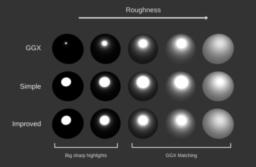
- explores a method to achieve toon-style specular highlights by modifying the Trowbridge-Reitz NDF within a PBR pipeline
- introduces a “Specular Size” parameter to expand highlights while preserving the original GGX shape
- details a version that matches the original energy distribution at high roughness to avoid over-brightening
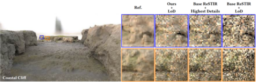
- introduces a surface point mapping that enables sample reuse in ReSTIR across meshes with different topologies
- enables LoD-aware ReSTIR by maintaining valid spatiotemporal reuse even when geometry LoD changes between frames
- provides a comprehensive tour of rendering strategies, categorizing them into object-order and image-order approaches
- traces the history from early rasterization and ray casting to real-time path tracing and neural representations like NeRF
- discusses the recent shift towards captured realism with 3D Gaussian splatting, highlighting how it bridges the gap between point clouds and real-time performance
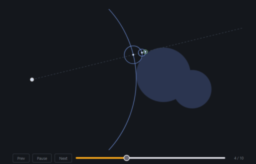
- documents the journey of building a custom, lightweight Vulkan-based graphics and compute library in C++
- covers the implementation of primitive rendering, perspective projection, depth testing, and vertex structures using Slang shaders
- explores GPU-accelerated simulations via compute shaders and instanced rendering
- details a handle-based API to simplify engine usage and cross-language integration
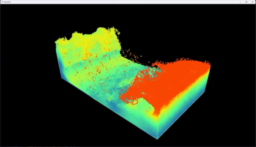
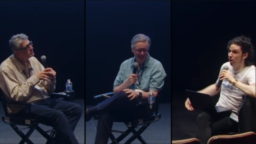
- features a conversation between Naty Hoffman and Eric Haines discussing the 40-year evolution of computer graphics
- explores the history and impact of the “Real-Time Rendering” book series and the importance of cross-industry knowledge sharing
Thanks to Nia Bickford for support of this series.
Would you like to see your name here too? Become a Patreon of this series.
